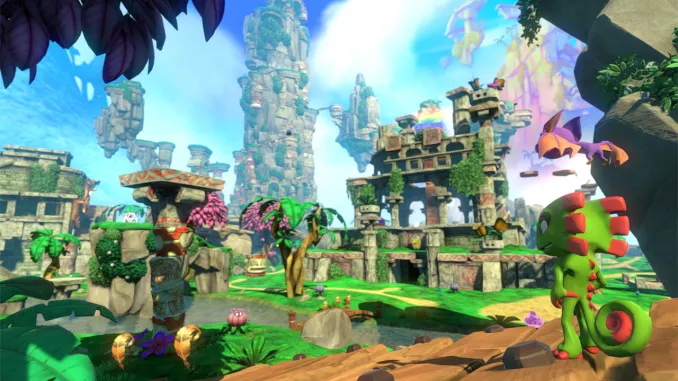
Yooka‑Laylee arrives as a spiritual successor to Rare’s beloved Banjo‑Kazooie, built by many of the original team members who defined N64‑era 3D platforming magicSteam. It delivers bright, whimsical fun and huge open playground worlds full of collectibles. Yet it faithfully brings forward not only the charm of 1990s platformers, but also many of their clunky, outdated shortcomings. The result is a love letter to retro gaming that shines for nostalgia fans, but struggles to fully fit modern‑day standards.
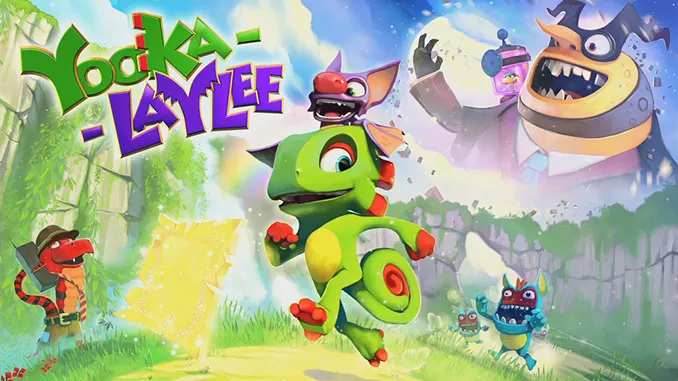
Story: Silly, Light‑Hearted Corporate Chaos
The plot is simple, cartoon‑style fun. Greedy tycoon Capital B runs Hivory Towers, a mega‑corporation plotting to steal every magical book across the world and turn knowledge into pure profitPlaytonic .... When Yooka, the easy‑going green chameleon, and Laylee, the sharp‑tongued bat, lose their prized magical book, the pair set off to recover its glowing golden pages known as Pagies.
Pagies are the core currency of the adventure. You spend them to unlock entirely new worlds or expand existing ones, adding extra terrain, secrets and fresh challenges to areas you have already visited. Humorous dialogue, goofy side‑characters, and mumbled gibberish voice‑acting echo Rare’s classic tone. The narrative never grows deep or dramatic; it exists mostly to give you an excuse to leap, explore, and hoard collectables.
Gameplay: Big Playground Worlds and Ability‑Driven Platforming
Gameplay follows classic collect‑a‑thon design. Each vast world is stuffed with Pagies, golden quills, ghostly Ghost Writers, and dozens of hidden secrets. You earn new special moves from Trowzer the snake by spending quills: tongue lashing, sonar blasts, gliding flight, bubble underwater breathing, and elemental berry powers for fire, ice and bomb attacks.
The duo’s movement feels satisfying. Jumping, rolling, and gliding across huge floating landscapes are smooth and rewarding. Worlds are massive sandbox playgrounds, filled with mine‑cart roller‑coaster rides, boss fights, arcade mini‑games and silly quiz show segmentsPlaytonic .... You can approach most objectives in nearly any order, giving great freedom to exploration‑minded players.
For all its strengths, Yooka‑Laylee carries noticeable frustrations inherited from older platformers. The original camera frequently fights against the player; it drifts, gets stuck behind geometry, and wrestles for control during precise platforming jumpsSteam. Some mandatory mini‑games feel repetitive and poorly tuned, and back‑tracking becomes frequent when you return to expanded worlds with newly unlocked abilities. Combat stays basic and shallow, little more than simple button mashing against uncomplicated foes. While later patches improved the camera controls, these rough edges never fully disappear.
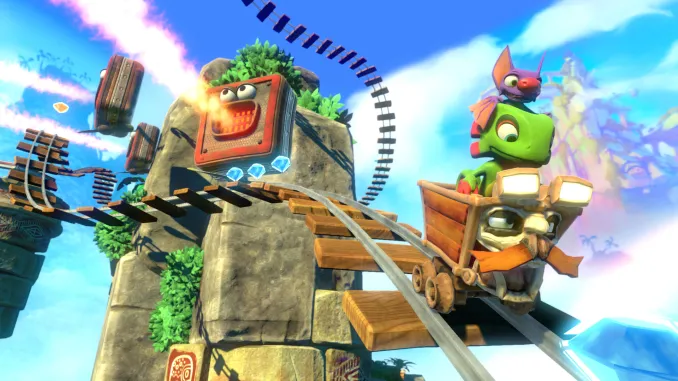
Art, Audio and Atmosphere
Visually, Yooka‑Laylee bursts with vivid cartoon colour. Lush jungles, glittering casinos, frozen mountain peaks and murky swamps all feature bold, saturated art design. Character models are expressive and full of personality, capturing that playful Rare‑esque aesthetic. Environments are huge, though texture quality can feel plain in spots.
The soundtrack stands as one of the game’s highest highlights. Composed by Grant Kirkhope, David Wise and Steve Burke, the music shifts dynamically as you explore, mixing upbeat playful melodies with calm atmospheric themes. Sound effects and the characters’ nonsense gibberish speech complete the warm nostalgic vibe.
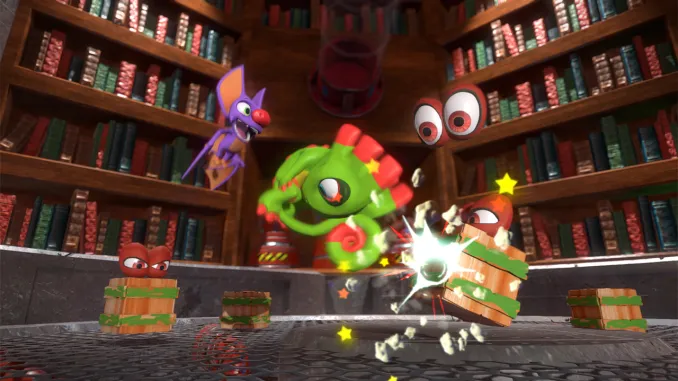
Shortcomings: Nostalgia Is Not Enough
Yooka‑Laylee’s biggest weakness is that it preserves retro flaws rather than updating them. Giant open worlds occasionally lack tight, creative level design. Some collectible hunts turn into tedious scavenger‑hunt busy‑work instead of clever puzzles. Certain mini‑games, quiz segments and mine‑cart sequences lean into trial‑and‑error frustration rather than fair challenge.
If you do not already love old‑school collect‑a‑thon games, the loop of gathering dozens of items across sprawling maps may feel aimless and dated. There is little hand‑holding; players who prefer streamlined, guided modern platformers will likely grow annoyed by unmarked objectives and clunky camera behaviour.
Final Verdict
Yooka‑Laylee succeeds as a nostalgic throw‑back. If you grew up with Banjo‑Kazooie and crave that style of large‑scale free‑form 3D platforming, it offers hours of joyful exploration, wonderful music and charming character writing.
Still, it does not fully modernise the formula. Its outdated camera, uneven mini‑games and moments of tedious collectible‑grind keep it from being a true classic for every audience. It is a solid, enjoyable tribute, best‑suited for players who accept its old‑school rough edges.